
 Español
  Français
  Italiano
  English

On the occasion of the public debate promoted by the Forum of Mediterranean Women Journalists and NOIRETEDONNE in Lecce on 27 November 2025 (Si vis pacem: UN Resolution 1325 and the Role of Women in Conflict Prevention) and further developed by CeSPI (Centre for International Policy Studies) through its initiative “Promoting the Women, Peace and Security Agenda for a More Equitable and Inclusive Society”, our President, Maura Viezzoli, has authored an in-depth article marking the 25th anniversary of United Nations Security Council Resolution 1325.
In her analysis, Viezzoli examines both the achievements and the enduring shortcomings of the Women, Peace and Security (WPS) Agenda, underscoring that peace is not merely the absence of war, but an active and ongoing process of social construction. Drawing on CISP’s field experience, the article stresses the urgent need to translate international commitments into concrete practices rooted in local communities and driven by women’s leadership.
Twenty-five years after the adoption of Resolution 1325, the overall assessment of the WPS Agenda remains deeply incomplete. Despite the escalation of global crises and armed conflicts, the effective implementation of the Agenda continues to fall far short of its initial promises. Women remain largely excluded from negotiation and decision-making tables: in 2024, only 7% of negotiators and 14% of mediators in peace processes were women.
In many conflict and post-conflict settings, gender policies are still largely declaratory, with little tangible impact on people’s everyday lives. National Action Plans, intended to translate Resolution 1325 into concrete action, often represent weak commitments hampered by insufficient funding, limited political support, and inadequate mechanisms for monitoring and accountability.
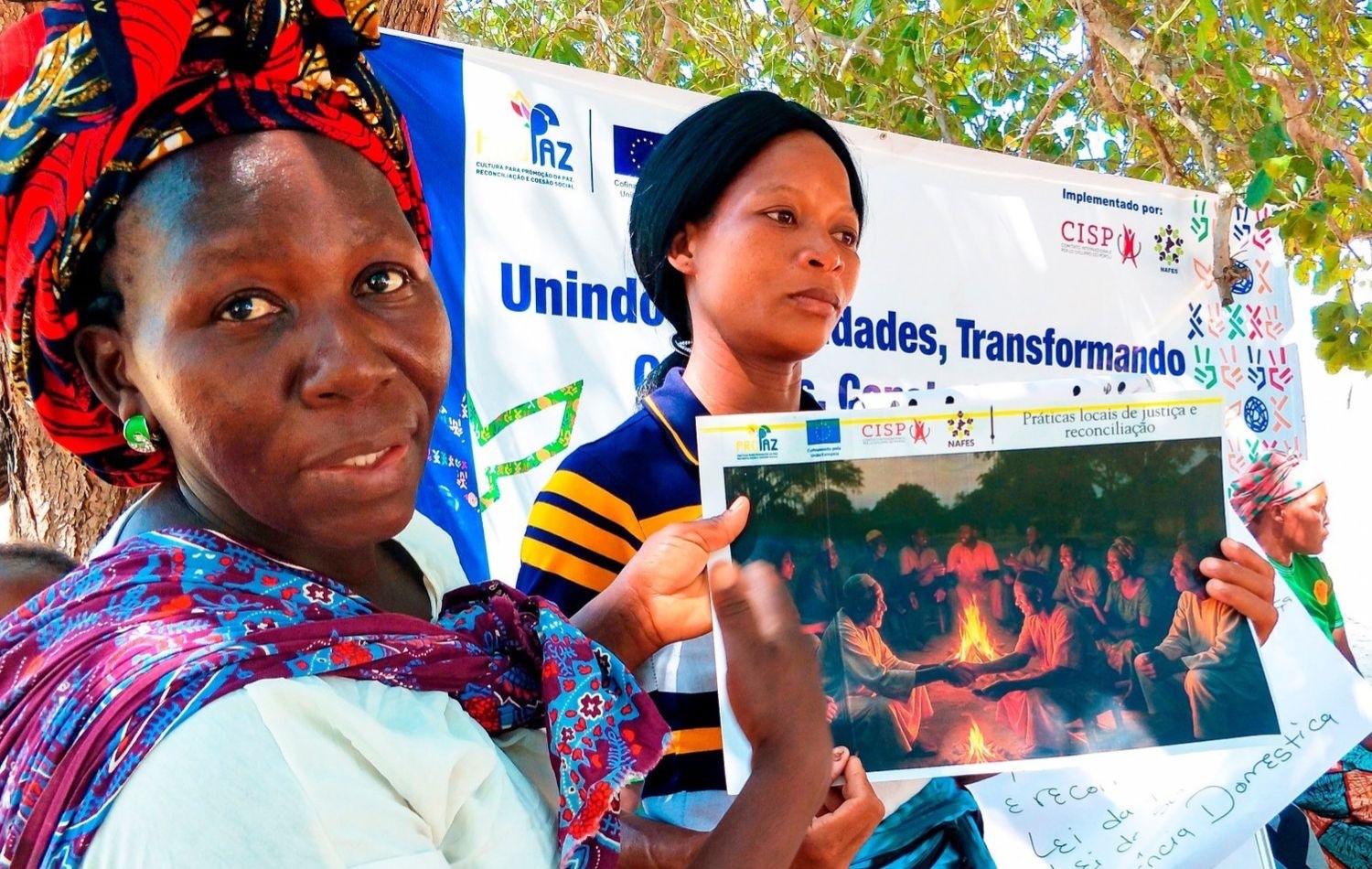
In the face of these limitations, it has become increasingly evident that peace cannot be built solely through international agreements or peacekeeping missions.It is from this perspective that international cooperation experiences acquire particular relevance, such as those promoted by CISP in Mozambique through the Pro Paz Project, and in Colombia through a fish-farming initiative involving cooperatives of former FARC-EP combatants, funded by the European Fund for Peace. These experiences demonstrate how the WPS Agenda can be translated into meaningful, tangible practices when it is grounded in local realities and co-created with communities.
Click here to read the full article (in Italian)